
Through the Lens of Aloha: Joe Dypiangco and the Art of Preserving KAHĀ’s Moments
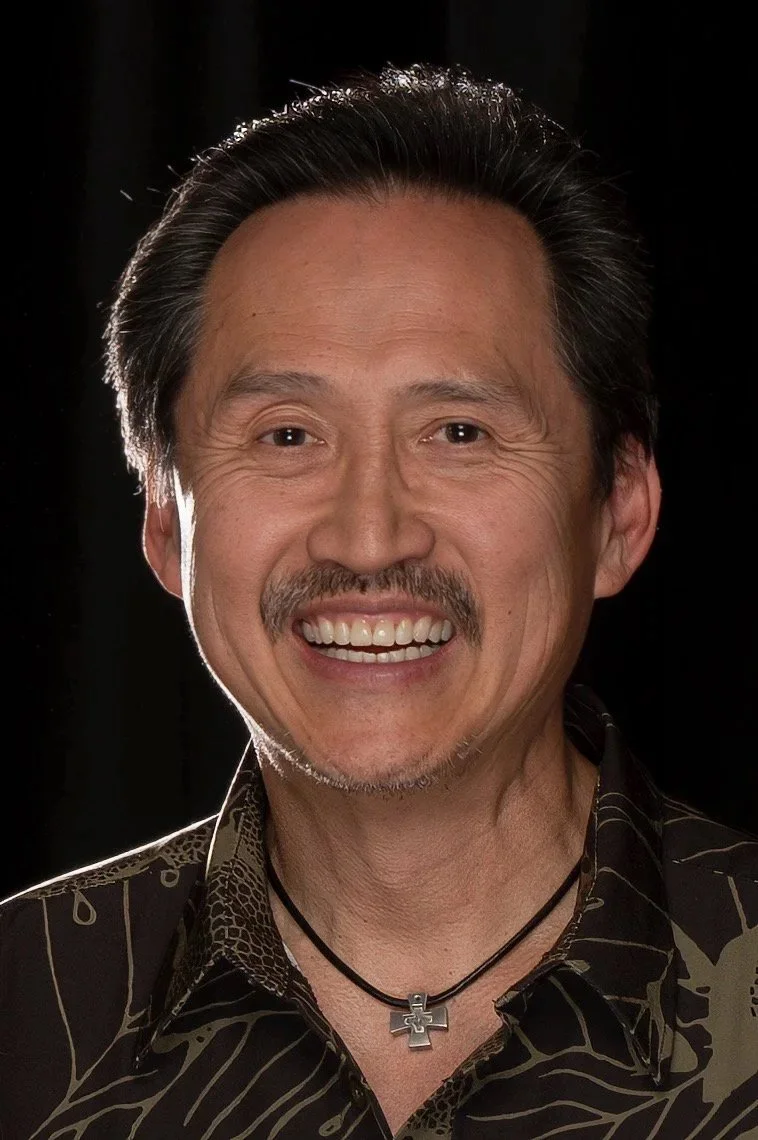
Uncle Joe Dypiangco, the organization’s official photographer.
Meet our Photographer in Residence
At the heart of Ka ʻAha Hoʻolauna Aloha (KAHĀ) is a commitment to ʻike, pilina, and the preservation of culture across generations and geography. While kumu, practitioners, and participants bring ʻike Hawaiʻi to life through practice and presence, there is another essential role quietly shaping how these moments endure: the storyteller behind the lens.
For KAHĀ, that storyteller is Uncle Joe Dypiangco, the organization’s official photographer.
Uncle Joe’s journey into photography did not begin as a profession, but as a father’s act of love. More than two decades ago, his daughter Miranda enrolled in a local parks and recreation hula class. What began as a simple after-school activity soon grew into a deep and sustained commitment, as she continued her training with Hālau Nā Pua Lehua I Ka Ua Noe. Alongside her journey, Joe found himself drawn not only to documenting her progress, but to the beauty, discipline, and cultural depth of hula itself.
Over time, that curiosity transformed into a profound respect for Hawaiian culture.
Through years of standing at the edges of performances, rehearsals, and gatherings, Joe developed an eye not just for composition, but for meaning. He began to understand that hula is not simply movement, it is ʻike in motion, a living archive of stories, lineage, and identity. With each photograph, he was not just capturing an image, he was preserving a moment of cultural expression.
That perspective is what he now brings to KAHĀ.
As a volunteer photographer and historian, Uncle Joe plays a vital role in documenting the annual KAHĀ Conference, a gathering that brings together kumu, cultural practitioners, and community members from across the pae ʻāina and the diaspora. His work ensures that the ʻike shared in these spaces does not exist only in the moment, but continues to live on through imagery that can be revisited, reflected upon, and passed forward.
What distinguishes Uncle Joe’s approach is his intention.
His goal is simple, yet deeply meaningful: to capture as many faces as possible. Not just the performers on stage, but the participants, the learners, the quiet observers, the moments in between. He understands that for many who attend KAHĀ, especially those far from home, these gatherings are more than events. They are spaces of reconnection, belonging, and identity.
By photographing the people within these spaces, Joe ensures that individuals can see themselves reflected in the ʻike they are helping to carry forward.
There is something powerful about that act. To look at a photograph and recognize not just a moment, but your place within it. To remember the joy, the learning, the laughter, and the connection. And then to share that memory with others, extending the reach of aloha beyond the gathering itself.
In this way, Uncle Joe’s work becomes more than documentation. It becomes a bridge between past and present, between experience and memory, between individual and community.
At KAHĀ, where the mission is to unite communities through cultural knowledge and aloha, Uncle Joe Dypiangco’s lens plays an essential role in ensuring that these moments are not only experienced, but remembered.
And in every frame he captures, there is a quiet but powerful truth: ʻike lives not only in what we learn, but in what we carry, and in how we choose to remember.